

Few areas of today’s working world are more active and ever-changing than the recruitment and job-hunting space, and learning how to create an ATS resume optimized for a job listing has never been more important.
Technology has pushed how professionals pursue their next career leap forward and added extra layers to penetrate when landing that dream job too. On average, each corporate job posting attracts 250 applicants, often thousands more. It’s important to tailor your resume to get noticed in a crowd.
Because recruiters and employers have so many job seekers to choose from every time a new position gets listed online, competition is fierce, and companies need a way of filtering out the best applicants before human eyes can land on them.
That’s why many businesses today use an applicant tracking system. An ATS is very beneficial to large companies but also something that can leave well-rounded candidates out of the running if they’re unprepared.
In today’s job market, a job seeker’s resume needs to be optimized for an ATS, the job application, and the job description with the right keywords. Here we’ll explore the best ways to optimize your resume, so it makes it to the hiring manager’s desk and beats an ATS resume scanner for your preferred job opening.
MatchBuilt teamed up with Miriam Groom from Mindful Career, an HR expert and leading career counselor, to share the best strategies for creating an ATS-optimized resume. Miriam uses behavioral profiling and psychometric assessments to uncover a job seeker’s ideal career. If you are endlessly applying online but unable to secure a job offer or even an interview, we encourage you to contact Miriam and her team for assistance.
In this post, we explore every aspect of creating an ATS resume:
- What exactly is an ATS applicant tracking system?
- Why optimizing your resume for an ATS is important.
- How to use specific keywords from the job posting.
- How to showcase your years of experience.
- What file format to use.
- How to match your ATS resume with the job requirements.
- How to properly share your work history and technical skills to get the job interview of your choice.
At MatchBuilt, we are dedicated to helping job seekers write job-winning resumes. For more tips on resume writing, check out similar topics such as how to say that you’re a fast learner on your resume, how to say you trained someone on your resume, and 50 other tips for an effective resume.
What Is an Applicant Tracking System?
For those professionals looking to navigate the job market, especially in active markets like property and construction, an applicant tracking system (ATS) can feel like just one more hurdle between you and your interview.
That’s only half the story – and it’s also not as adversarial as you might think. A business’s ATS is implemented because the management wants a complete solution for their hiring process.
A good ATS will not only list the job vacancy and parse through applications in an automated way but also engage candidates’ interests and provide a smooth onboarding process.
Hiring is expensive, and companies are keen to streamline that process. Similarly, when an ATS is used well, candidates feel more in the loop about where in the journey from application to landing the job.

Why Is an ATS Resume and Job Optimization Important?
An ATS is programmed to find and secure the best talent on the job market. They do this by automatically scanning through and identifying key phrases, job titles, and candidate career experiences that fit well with the advertised position.
When hitting these keywords, the resumes featuring them – as well as other vital attractors such as training, experience, or even hobbies and transferable skills – are forwarded by the ATS to the hiring managers.
The ATS is a big part of your application process that you must consider as it is now the “human eye” that reads over your application. In especially large or Fortune 500 companies, management is so pressed for time that using an ATS to sift through applications is necessary.
Learning how to satisfy the ATS with your resume, even an entry-level resume, and showcase your skills properly has never been more critical. The conversation begins when your future manager first touches your resume.
Learn to step confidently past the ATS gatekeeper, and you’re halfway home.
10 Tips to Creating an Effective ATS Resume
Most of us know how to create an eye-catching resume that covers your core competencies succinctly and intrigues managers enough to call you up for a screening call – or an interview invitation.
But with a few tactical adjustments, similar to optimizing your LinkedIn profile, your resume can also wow the ATS programming in much the same way. All it takes is knowing what the machine is looking for and tailoring your resume to suit.
Better still, these are only minor changes – but you could be surprised what a difference they make. Below are the best practices for creating an ATS resume that gets noticed.
1. Don’t Apply for Multiple Jobs With One Company
Many of us have an emotional attachment to a particular company – their culture, how they treat their employees, or simply a name we all grew up with.
When we know companies we love are hiring, it’s natural to want to land any position we can inside their coveted corridors – but with an ATS, that scattergun application process is a mistake.
While management will be flattered by the attention, they rely on an ATS to hone in on crucial skills for critical positions. If their system shows you’re applying for every job they advertise, they could believe you don’t know what you want from your career.
2. Only Apply to Roles You’re Qualified For
We all know a story about someone who managed to smooth talk their way into an interview for a position they weren’t, strictly speaking, experienced or qualified to work in.
ATS software is deployed to help managers prevent that from happening. That means your charisma and spunk will work well in an interview – but the ATS needs to see demonstrable career history and training relevant to a given position before you get that far.
3. Make Your Resume Easy To Skim-Read
While it doesn’t always sit well with people, skim-reading is used by both ATS software and managers when first handling your resume. That means formatting the document in a pleasing way to the eye – or the Indeed algorithm.
The key ideas to make your resume easy to skim-read include leaving a decent amount of white space, putting your critical skills and soft skills separately from your career history, and keeping those essential bullet points concise and to the point.
4. Keep the Formatting Simple
It’s bittersweet to acknowledge that the age of the elegant resume is long behind us. Today, both recruiters and their ATS sidekicks prefer a resume that is far more a case of function over form.
That means avoiding including graphics, photography, tables, charts, text boxes, columns, and unusual fonts is in your best interest. These can definitely catch the eye of a human reader – but that isn’t the goal with an ATS.

5. Use .doc or .pdf File Type
While a human recruiter can bite the bullet and download new software for fanciful file types if their interest in a candidate is piqued, an ATS is nowhere near as accommodating.
Keeping the idea of simplification in mind from the last few points, make sure to save your resume in the .doc or .pdf format. Fortunately, switching these two file formats back and forth is also straightforward.
6. Maximize Job Keyword Optimization
Important keywords aren’t just for SEO nowadays. When choosing whether to pass your resume to management, ATS systems actively scan for phrases that relate to your capabilities, transferable skills, and career history.
Entry-level positions in an ATS will scan for educational qualification keywords such as whether or not you were on the Dean’s List or went to a prestigious school. C-suite roles in an ATS scan for corporate and executive language – and more broadly, an ATS looks for job titles that match the title of the role being recruited for.
For example, if you’re a property manager, and the role is expressly recruiting for a property manager, that’s the job title to use. If the role at your last company was as a Portfolio Executive, but you had the exact same responsibilities, consider simply switching the title to match what the ATS is seeking.
7. Don’t Attempt To Trick the ATS
Any loopholes in how an ATS works get caught fast. That means trying to fool the system has a low chance of success – and signals to a potential future employer you don’t mind manipulating situations to your advantage. Is that the first impression you want to give?
Some urban legends like writing keywords in white so humans don’t see them, but the ATS does – or dotting keywords into your resume randomly to catch the machine’s attention – have no chance of getting past an ATS today.
Recruiters who catch these practices will dismiss your resume immediately – a wasted opportunity for everyone.
8. Use Keywords Logically and Grammatically Correct in Sentences
Candidates who want to fulfill an ATS resume scan by simply leaving keywords in a bullet point list might find their applications aren’t picked up by management overall.
Much like bad SEO advice, bad keyword advice for ATS software forgets that the machine is learning to read to help humans make better decisions. That said, put your keywords into the natural grammatical flow of your resume.
9. Bullet Point Your Soft and Transferable Skills
Don’t be discouraged by the prior advice – bullet points that list your skills separate from your career history are a winner with both recruiters and ATS software.
Often, it’s faster for both parties to be able to scan those skills before diving into your career history, so be sure to present them in a brief bullet-point list. You can explain where you demonstrated those capabilities in your career history section.

10. Stay Informative and Concise
Stories and anecdotes should be saved for the interview to wow recruiters – an ATS simply won’t be able to make good use of them, even if they demonstrate your skills or feature some appealing keywords.
Your resume will stand out for its factual content and professional approach, and remaining concise but explaining yourself well shows managers how much you value their time.
Remember that an ATS is not your enemy with all the above points in mind. It can feel like it’s simply gatekeeping your access to recruiters. Still, when you tailor your resume to match its expectations, you’ll find an ATS actually connects you far more efficiently with the decision-makers at your next venture.
Remember that the ATS will parse out the address on your resume. If you aren’t living in the location of the job you are applying for, you may be rejected.
In property and construction, the name of the game is always trust and transparency. Align your resume to showcase those values, and the ATS and your potential future manager will be easy to please.
Best Resume Optimization Tools
There are a couple of resume optimization tools on the market that you may want to consider, TopResume and JobScan. The job and resume scanners can help you maximize the content on your resume and compare it to the job you are applying to. You simply upload your resume and view the feedback instantly.
TopResume
TopResume offers a wide range of services to fit your job search needs. If you’re looking to pass through recruiting software, impress hiring managers, or land more job offers, TopResume may be the solution for you.
Jobscan
Jobscan analyzes your resume against proven recruiter preferences and hidden requirements buried in the job description. If your resume comes back under an 80% match for a job, you’ll then follow easy suggestions to boost your resume score and interview chances.
ATS Resume Templates
Writing a resume from scratch is time-consuming. You can avoid the headache completely with the help of an ATS resume template customized to fit your needs. These Google doc templates and super easy to use and have been utilized by thousands of job seekers.
When using an ATS-friendly resume template below from google docs, remember all of the tips above around leveraging the information you learned about the company and job opening from the description. Use relevant keywords throughout the resume content of the education section, experience section, and summary section for a complete ATS-compliant resume.
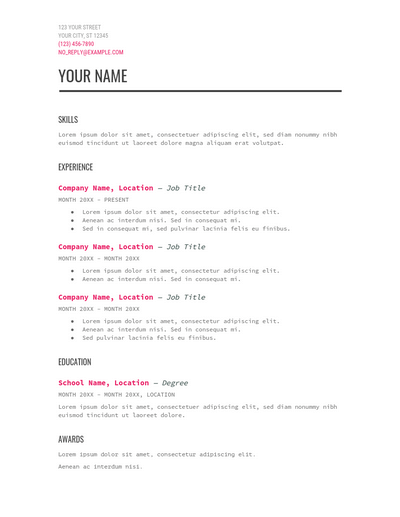
To use the templates below, click the image to view the Google doc resume. From there, you can save the resume as any type of document you’d like (Google Docs, Word, etc.). You can also save it as another Google doc to begin editing another draft.
To quickly find these examples and resumes on Google Docs, launch the Google Docs app (create an account if you haven’t already). Then, click on “Template Gallery” from the home page and scroll down until you find the resume templates. Pick a template and start editing.
Each ATS resume Google Doc resume example is easy to navigate and minimalistic. Most of the templates are ideal for both recent graduates and seasoned pros.
You can easily add or replace any section you wish. So, if you’re unhappy about the skills section being so high up, just replace it with a professional summary or a career objective.
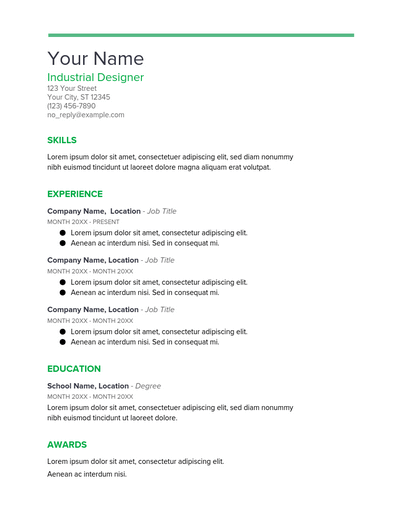
1. Google Doc “Spearmint” ATS Resume Example Template
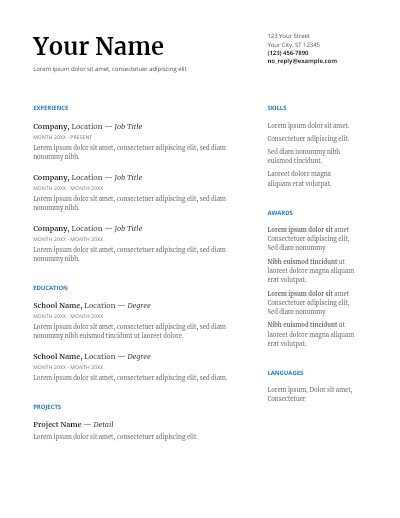
2. Google Doc “Serif” ATS Resume Example Template
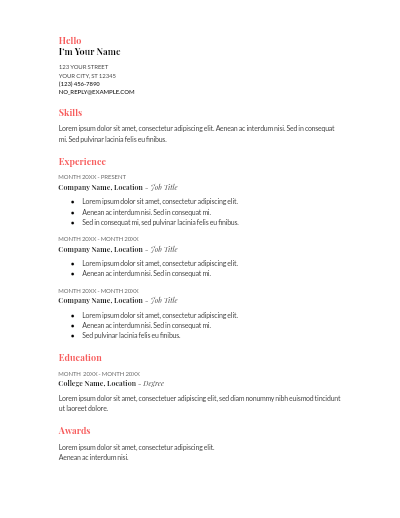
3. Google Doc “Coral” ATS Resume Example Template
4. Google Doc “Swiss” ATS Resume Example Template
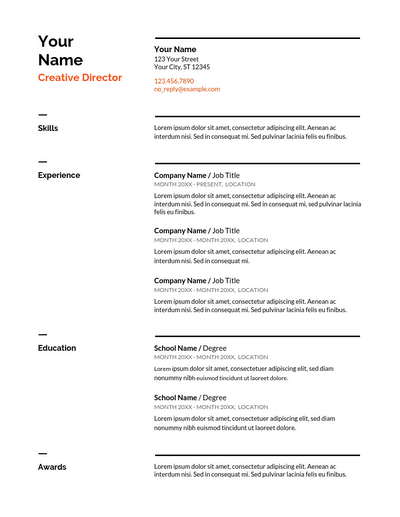
5. Google Doc “Modern Writer” ATS Resume Example Template
Resume ATS Optimization Final Thoughts
When writing an ATS resume, it’s important to only apply to qualified roles, make it easy to skim-read, format it appropriately, utilize white space, and leverage the job description for keywords. Include your contact information and resume summary, and clearly highlight your skills, education, and experience.
We appreciate Miriam Groom from Mindful Career, a leading career counselor, for sharing her expertise on ATS-friendly resumes. Miriam uses behavioral profiling and psychometric assessments to uncover a job seeker’s ideal career. We encourage anyone that is struggling to land their next job or find their ideal career to reach out to her and her team.
Need More Help? Check Out These Video Tips for Creating an ATS Resume
